How can Atlantic Canadian businesses prepare?
Canada’s decision to name Germany’s ThyssenKrupp Marine Systems (TKMS) as the preferred supplier for up to 12 new Type 212CD submarines represents a major step in what could become the largest defence procurement in Canada’s history. For Atlantic Canadian businesses in naval defence support, marine manufacturing, technology, construction, and professional services sectors, this project represents an opportunity to be part of an unprecedented influx of industrial investment.
How can Atlantic Canadian businesses prepare for this opportunity?
Canada’s Industrial and Technological Benefits Policy (ITB) requires TKMS to generate business activity in Canada equal to the value of the contract. That means Atlantic Canadian companies will have opportunities to compete for related work and capture a substantial share of this spending.
Businesses that proactively assess their operations scalability, compliance obligations, workforce capacity, financing needs, and potential partnerships to identify any gaps in preparedness will be the ones best prepared to compete. Engaging experienced legal counsel early will be key for businesses as they navigate regulatory requirements, seek to protect key assets, structure strategic relationships, and position themselves to compete effectively as the project advances.
A region already built for this
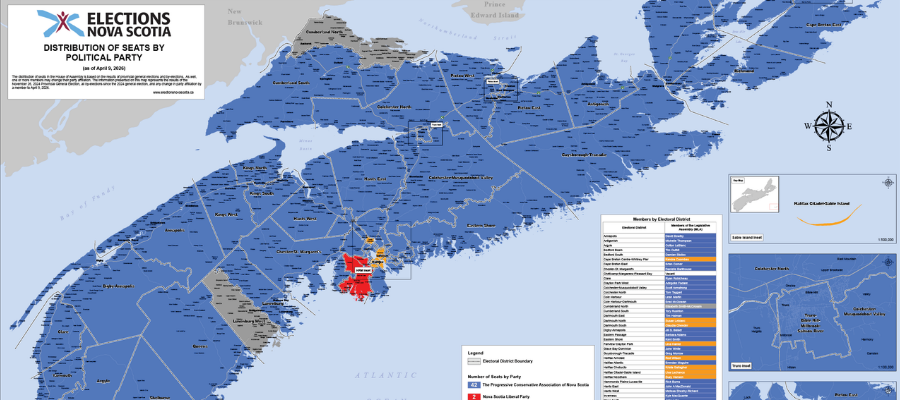
Atlantic Canada is not starting from zero. It is home to an ecosystem of firms, skilled workers, ports, shipyards, research institutions, testing facilities, and industry organizations that collectively support defence and marine-sector activity and is ideally positioned to benefit from the industrial opportunities created by the Canadian Patrol Submarine Project (CPSP).
Halifax in particular serves as a strategic hub for naval operations and defence innovation, with organizations such as NATO’s DIANA providing a regional presence connecting emerging technologies with alliance-wide defence priorities. Nova Scotia hosts major shipbuilding, naval support, ocean technology, and defence firms. New Brunswick has advanced manufacturing capabilities, logistics, cybersecurity, and engineering expertise. Prince Edward Island has aerospace components, advanced manufacturing, and specialized technology services. Newfoundland and Labrador has offshore operations, remote sensing, marine research, and Arctic-related expertise.
Backed by a network of universities, colleges, and applied research centres, regional companies are active in arenas such as shipbuilding and marine engineering, training and simulation, sonar and acoustic systems, cyber resilience, communications technologies, defence systems integration, AI, remotely operated and autonomous systems, and professional engineering services.
The workforce behind the opportunity
Companies competing for CPSP work will need engineers, technicians, tradespeople, and cybersecurity specialists. Atlantic Canada’s 16 universities are positioning themselves to respond.
Atlantic Canada’s Prosperity Charter, a joint initiative of the Association of Atlantic Universities and the Atlantic Chamber of Commerce, asks employers and universities to commit to connecting student talent with regional opportunity.
Ava Czapalay, CEO of the Association of Atlantic Universities, points to David Campbell’s Help Wanted, published by the Public Policy Forum in May 2026, as part of what prompted the charter. The paper describes a demographic timebomb in the region: an aging and shrinking population, with fewer immigrants and international students.
“Atlantic Canada’s 16 universities, located in communities throughout the region, keep our youth here and produce the workforce that businesses need to thrive,” says Czapalay.
The retention argument has data behind it. The Maritime Provinces Higher Education Commission has tracked graduate outcomes since 1996, and the majority of students who attend university in the region stay in it. Defence adds another layer. Many of the sector’s facilities and infrastructure sit in close proximity to campuses, and universities already partner with defence and marine firms through organizations such as Springboard Atlantic, supporting research into dual-use technologies with both commercial and naval applications.
That relationship is expanding. Nova Scotia’s universities recently established an agreement with the Canadian Military, Veteran and Family Connected Campus Consortium to remove barriers and build flexible academic pathways for active service members, reservists, veterans, and their families. Czapalay expects the agreement to extend across Atlantic Canada.
For employers, the Charter asks for engagement before a graduate reaches the job market: networking events, industry panels, mentorship, workplace visits, co-op and internship placements, and hiring. Universities commit to expanding their work-integrated learning programs to meet that demand.
Darren Czech, CEO of Cherubini Group of Companies, signed the Charter on that basis. “By sharing what we do, we can help students better understand potential career paths and discover opportunities they may not have otherwise considered,” says Czech.
Czapalay’s next goal is a regional asset map showing what the 16 universities can offer the defence sector: programming, research capacity, and infrastructure already in place across Atlantic Canada. “I would like for decision makers to know that we have tremendous capacity here to support defence sector growth and, for that matter, population growth,” she says.
Long-term opportunities for Atlantic Canadian businesses
A major defence procurement project presents an opportunity for decades of economic value in building initial facilities, workforce development, logistics, professional services, supply-chain integration, specialty manufacturing, coatings and materials, electronics integration, sensors and sonar technologies, cybersecurity and communications systems, engineering and technical services, environmental monitoring, facilities maintenance, and workforce training. Many Atlantic Canadian companies already operate in these areas and have experience supporting complex projects.
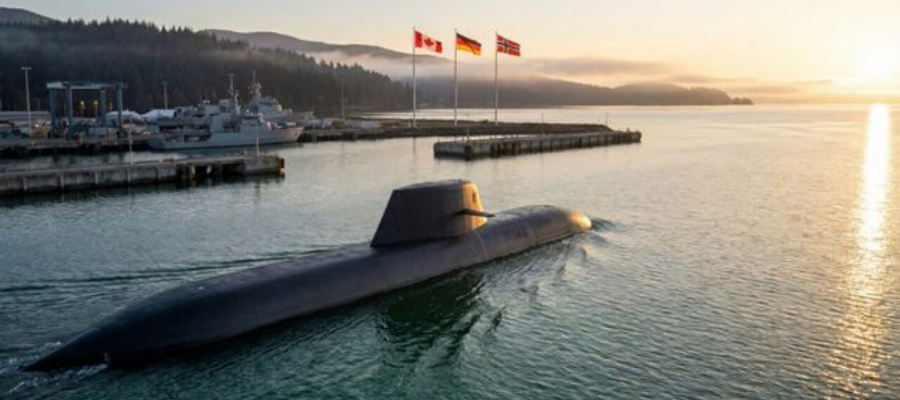
The CPSP program will also create pathways into European and NATO-aligned supply chains. Because the project is being developed and operated in cooperation with Germany and Norway, Atlantic Canadian companies that successfully position themselves could gain exposure to international partners that will provide future opportunities beyond the Canadian market. For some businesses, the most valuable outcome may be the long-term relationships established with European defence contractors, suppliers, and alliance organizations.
Get your business ready now for the opportunity ahead
Participation, however, will require preparation. The opportunities will likely emerge in phases. In the near term, businesses may focus on supplier-readiness assessments, certifications, compliance planning, bid preparation, strategic partnerships, and relationship-building with prime contractors and supply-chain participants. Over the longer term, opportunities may expand into sustainment, infrastructure projects, training programs, systems integration, fleet support, and participation in international defence supply chains.
“This is where early legal and strategic planning can create a competitive advantage,” says Patrick Fitzgerald, Partner at Cox & Palmer. “Whether the goal is to strengthen supplier readiness, negotiate commercial agreements, navigate regulatory requirements, or position a business for long-term growth, taking a proactive approach can help organizations improve their ability to compete for emerging opportunities and avoid costly delays.”
Key considerations
Corporate Readiness
• Assess whether your governance structure, policies, insurance coverage, and internal controls meet the expectations of major contractors and government purchasers.
• Review documentation practices to ensure records, reporting processes, and quality controls can withstand procurement scrutiny and audit requirements.
Compliance and Security Requirements
• Identify certifications, registrations, and security obligations that may apply to your business, such as registration in the Controlled Goods Program or the Industrial Security Program.
• Consider whether your operations are prepared for program compliance, personnel security screening, cybersecurity requirements, export controls, sanctions compliance, and data-handling obligations.
Contract Review and Negotiation
• Recognize that major foreign defence contractors often have complex contracting requirements, strict compliance expectations, and established supply-chain standards. Early legal review can help businesses negotiate effectively, protect their interests, and identify risks that may not be obvious during the bid or negotiation process.
• Understand the allocation of risk before signing supplier or subcontractor agreements.
• Pay particular attention to provisions relating to limitation of liability, indemnities, flow-down obligations, intellectual property ownership and licensing, confidentiality, audit rights, termination rights, warranty obligations, performance milestones, and dispute resolution.
Workforce and Employment Planning
• Consider recruiting needs, security-clearance requirements, specialized labour demands, employee mobility issues, and workplace policies for participation in regulated defence-sector work.
Financing and Growth Strategy
• Assess whether additional capital, strategic partnerships, or corporate transactions may be needed to scale operations.
• Businesses may benefit from support with investment agreements, government funding applications, joint ventures, strategic alliances, acquisitions, or other growth initiatives designed to position them for defence-sector opportunities.
Now is an appropriate time to ask three practical questions:
1. Where could your business contribute within the submarine supply chain?
2. What certifications, compliance requirements, or operational gaps need to be addressed?
3. What legal, contractual, or strategic support will be required before engaging with project primes, other defence-sector partners, and the government procurement processes?
Getting these answers right and getting them early may determine not only whether your business participates, but how successfully it does so.