Charting our economic course through a time of uncertainty
At the outset of 2026, the view to an economic outlook for the year is far from clear.
American actions have a uniquely large impact on the world. This is especially the case for Canada given the realities of geography and our deep and longstanding integration into a broader North American market. When American actions, day after day, can be described most charitably as “capricious” – tariffs or no tariffs? CUSMA or no CUSMA? – our way forward changes from a metaphorical straight highway on a sunny day to a twisty rural road, shrouded in fog.
An impaired view, however, should not be construed as an absence of vision or focus.
We do see clearly now that trading relationships must be diversified, that our military must be strengthened, and that major energy, resource, and infrastructure projects must be accelerated to ensure that Canada remains strong and independent in the face of a new North American reality.
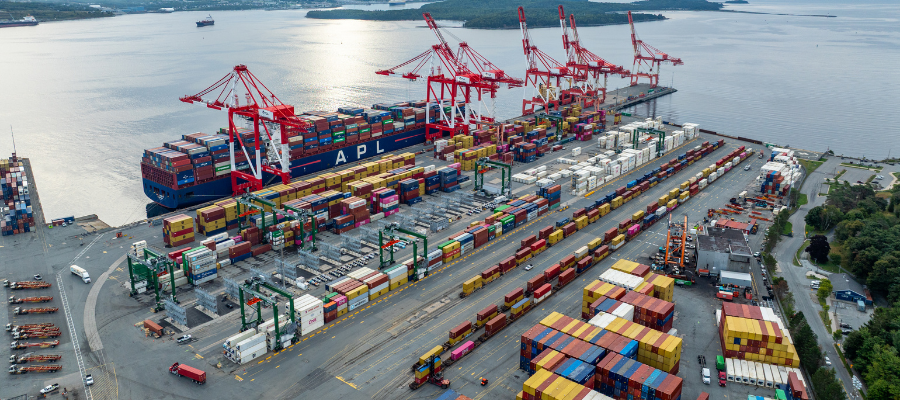
Halifax is well-positioned to benefit from these developments as a trade gateway between the continental interior and ports across the Atlantic in Europe and beyond, as the site of Canada’s largest military base and defence manufacturing endeavour, and as the business and service support hub for potentially very large new developments in the province’s natural resource and energy sectors. We must set our sights on seizing these opportunities.
We also have sharp focus in our rearview mirror. In early 2025 the Productivity Puzzle initiative was launched. While still ongoing, certain findings from the project are already clear. Improving our productivity performance is critical to driving income growth, narrowing inequality and opportunity gaps, and ensuring that future generations can have realistic aspirations of a rising standard of living.
Current circumstances require all Canadians to jettison parochial politics and embrace cooperation and trade with one another.
Pressures not only from the changing international landscape, but also major shifts like the adoption of artificial intelligence, heighten the need for a well-educated and skilled workforce aligned to industry needs. This means that our education system must perform better from early childhood education into the P-12 system and on through our post-secondary institutions. Deeper discussions are required among the business community, educational institutions, and governments to ensure both that students are acquiring the skills and abilities that will allow them to succeed in life and that the economy’s labour needs are being met.
To ensure sufficient labour supply into the future as our population continues to age, we must continue to attract skilled young workers from across Canada and around the world. The most recent population estimates show slower growth from 2024 to 2025 as a result of changes in immigration policy. Industry, governments, and the post-secondary sector will need to work together to align immigration and education policy to economic needs and opportunities in our region.
Just as bold and politically courageous decisions were made in the past to, for example, improve the taxation environment with the introduction of the GST, apply the fiscal brakes as our debt situation approached crisis levels, and embrace the need to tackle looming demographic decline, today we must also be prepared to engage in constructive conversation and compromise in regard to controversial topics like taxes, deficits, and immigration levels.
No one wished for the new challenges of the past year, but if any group is capable of navigating successfully through fog, that would be Nova Scotians.
Get the latest Halifax economic data and insights at: