How small businesses are building safer workplaces and supporting recovery
For small businesses, workplace safety is personal. On a close-knit team that feels more like family, everyone works together to keep things running smoothly.
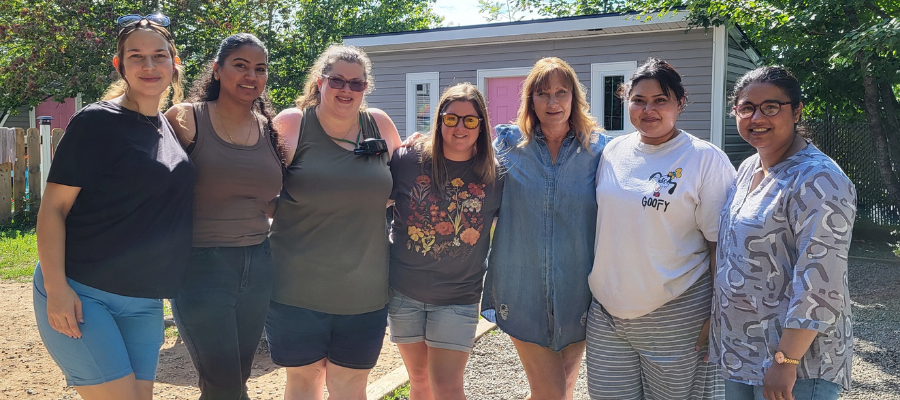
At Dartmouth Day Care Centre, Executive Director Angie Daniels-Drummond has seen that firsthand during more than three decades with the organization.
“I’ve had the honour and pleasure to be part of the Dartmouth Day Care Centre family for the past 33 years, and it’s truly my second home,” says Angie.
Most small businesses in Nova Scotia don’t experience workplace injuries often, but when they do, it can leave an already small team short-staffed and a business scrambling to keep up.
For Angie, creating a safer workplace means keeping prevention top of mind so that everyone who enters the building feels safe and supported.
Preparation can be especially important for small businesses. Unlike larger organizations, many small employers don’t have a dedicated health and safety team, so building safety habits into daily routines is what makes the biggest impact.
Matt Ross, Director of Employer Performance at WCB Nova Scotia, says the fundamentals go a long way: identifying and addressing hazards, talking regularly with employees about safety, and providing training and orientation so everyone understands their role.
“Safety is less about paperwork and more about recognizing hazards before someone gets hurt,” he says.
That kind of thinking by employers like Angie has helped reach the lowest level of time-loss injury ever in Nova Scotia.
When injuries do occur, employers need to know what to do to help workers recover while staying connected to work — which is so valuable for a small team like Angie’s who play an important role caring for children.
From submitting a claim to identifying accommodations or modified duties, Angie says supporting her employees to return to work following a workplace injury is a collaborative effort between herself, the employee, and WCB.
Recently, Angie experienced what it’s like on the other side of the claim following her own workplace injury.
During her recovery, she says she felt supported while her case was managed quickly, and she received physiotherapy that helped her recover without needing time away from work.
“I felt well cared for throughout the process and the weekly check-ins with WCB were super appreciated,” she says.
Because injuries can be infrequent on smaller teams, it’s easy for an employer to be caught off guard — resulting in delays in reporting and slowing down a person’s recovery. That’s why understanding the basics and being prepared is so vital.
“It’s really about knowing who will stay connected with the worker, understanding reporting requirements, identifying modified duties that can be offered, and keeping a record of conversations along the way,” says Matt.
For small businesses across Nova Scotia, maintaining a safe workplace and supporting recovery comes down to this: build strong safety habits, know what to do before an injury happens, and have a practical plan to support people when an injury occurs. Because we all want the same thing: to keep Nova Scotians working.