Black and African Nova Scotian entrepreneurs on confidence, creativity, and community
This year’s African Heritage Month provincial theme, “Strength in Unity: Moving Forward with Purpose, Prosperity, Power, and Progress,” focuses on the collective force that emerges when African Nova Scotians and people of African descent move together with intention. It recognizes unity as a driver of change—one that strengthens communities, advances justice, and creates opportunity.
The 2026 theme points to the more than 400 years of African presence in Nova Scotia and the enduring legacy of the province’s 52 historic African Nova Scotian communities. That legacy and purpose appears across industries in our province. From fashion and wellness to music and education, the Black and African Nova Scotian entrepreneurs featured here exemplify that power is personal and built through practice.
Dressing confidence, building legacy
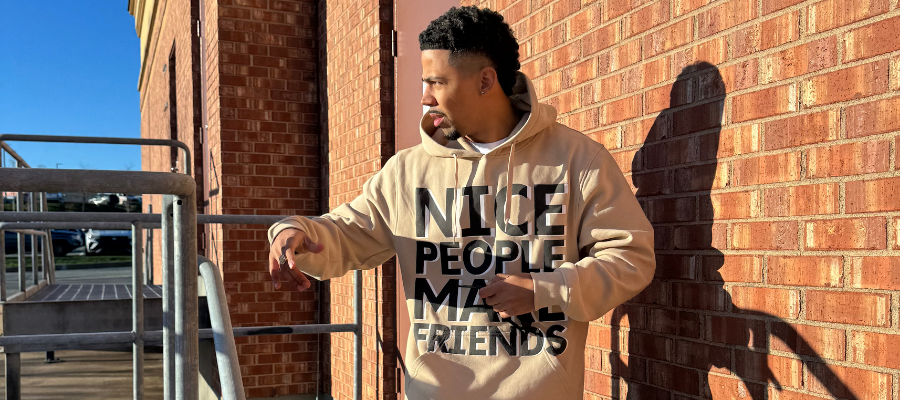
For Trevor Silver, Founder of tREv Clothing, empowerment is a meaningful exchange. “I use my brand to make people feel like they can be more,” he says. “I hear from people who say tREv inspires them, but honestly, I’m inspired right back by seeing them push themselves too.”
The same is true for Silver when it comes to perception, both internal and external. “That’s why presentation matters to me,” says Silver. “When you see yourself differently, you start moving differently. If my work helps someone feel seen and confident in who they already are, then I’ve done my job.”
That philosophy carries through Silver’s design process, where he recognizes that empowerment is deeply individual. “Empowerment starts with how someone feels the moment they put something on,” he says. “I’m always asking, will this make them feel comfortable, confident, and proud of how they show up?”
Ultimately, his work is rooted in principle and longevity. “I don’t design for hype,” says Silver. “I design from my principles, my roots, and what I actually believe in. I’m not here just for money—I’m here for legacy. When people choose to wear tREv, that trust is what keeps me building.”
As a creative entrepreneur, Silver is clear about what success means to him. “I want my work to show people that it’s possible, even if it takes time,” he says. “Longevity is just proof of commitment.”
The path, notes Silver, is rarely handed to you. “Nobody really opens the door for you,” he says. “You have to find the courage to walk through it yourself. If my journey helps someone believe they can do the same, then that’s bigger than anything I could sell.”
Reclaiming rest and inner authority
At Sacred Lotus Holistic Wellness, Founder Fantanesh Attomsa approaches empowerment through the nervous system—meeting people where they are rather than where they feel they’re expected to be. “For me, wellness is empowerment because it brings people back into choice, safety, and self-trust—especially for those who’ve spent years feeling like they had to ‘push through,’ perform, or explain themselves in spaces that weren’t built with them in mind,” she says.
Her work centers on somatic healing and regulation. “That means we’re not just talking about healing—we’re practicing what it feels like in the body,” says Attomsa. “Many people are already incredibly self-aware and ‘intellectualized’ about their patterns, but still feel stuck.”
Attomsa uses massage therapy, Reiki, Kemetic yoga, breathwork, sound healing, and meditation to treat her clients. “These modalities help clients build capacity to notice what’s happening inside, regulate stress responses, and reconnect with their own inner authority,” she says.
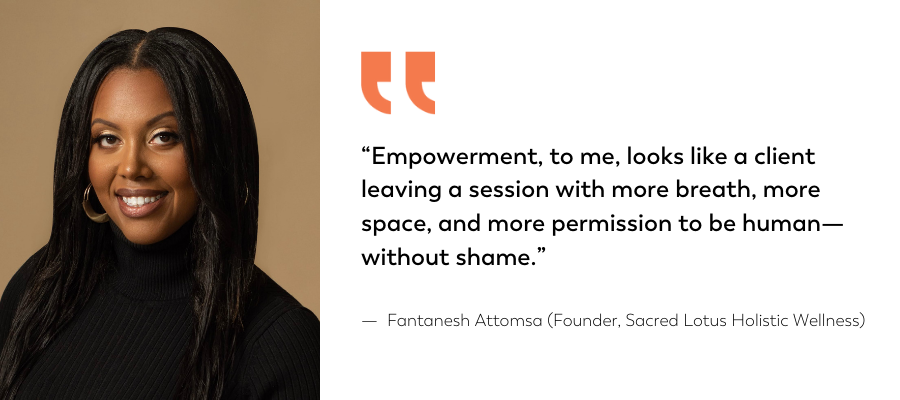
For Attomsa, empowerment is tangible. “Empowerment, to me, looks like a client leaving a session with more breath, more space, and more permission to be human—without shame.”
Creating a healing and empowering environment also means honouring the full context people bring with them. “Healing isn’t only personal—it’s shaped by our lived experiences, our communities, our histories, and the systems we’ve had to navigate,” says Attomsa. “So, a truly supportive environment honours the whole person: body, mind, spirit, identity, and story.”
That approach is grounded in cultural humility and consent for Attomsa. “I want clients to feel seen without being put on display, and supported without being ‘fixed,’” she says. “Rest, softness, and regulation are not luxuries—they’re forms of resilience and reclamation.”
Whether through one-on-one sessions, workplace wellness events, or community offerings like The Sanctuary, Attomsa’s goal remains consistent. “Balance isn’t something we force,” she says. “It’s something we allow when the body feels safe enough to exhale.”

Owning stage and story
For Julia Tynes, empowerment lives in performance. A pop-soul singer-songwriter known for dynamic live shows, she uses the stage as a place to connect, affirm, and invite others in. “I love bright colours, strong emotions, and a perfectly timed joke,” says Tynes. “My stage work blends retro glamour with East Coast soul—from the costumes and choreography I create myself, to the cheeky, honest lyrics in my songs.”
That energy extends beyond traditional concert settings. “In recent years, I’ve also brought that energy into interactive music assemblies for schools and libraries, where entertainment meets education,” she says. “Empowerment is central to my self-expression—making sure people leave with something real.”
After more than a decade in Toronto, coming back to the east coast was a shift for Tynes. “Returning home to Dartmouth, now a mother of two under the age of five, changed everything for me,” Tynes says.
In the past year alone, she performed more than 70 shows across the province. “What stood out wasn’t just the stages—it was the connection,” she says. “Audiences sang with me, shared their stories, followed my work, and brought their friends.”
Those moments reinforced her sense of purpose. “From the Halifax Tree Lighting to headlining the Multicultural Festival and performing on the main stage at the Halifax Jazz Festival, I felt genuinely welcomed,” Tynes says. “Those connections across the province have shaped my confidence and creativity.”
As an independent artist and CEO, she is clear about creative ownership. “I’ve never felt less pressure to conform than I do right now,” she says. “Being myself is incredibly freeing.”
That freedom includes embracing every part of who she is. “I own my frizz, my deep feelings, my unapologetic big dreams, my strengths and weaknesses, and the beautiful chaos of being a mother,” says Tynes. “I’m fully embracing my ‘Brave’ Era.”
Leadership through learning
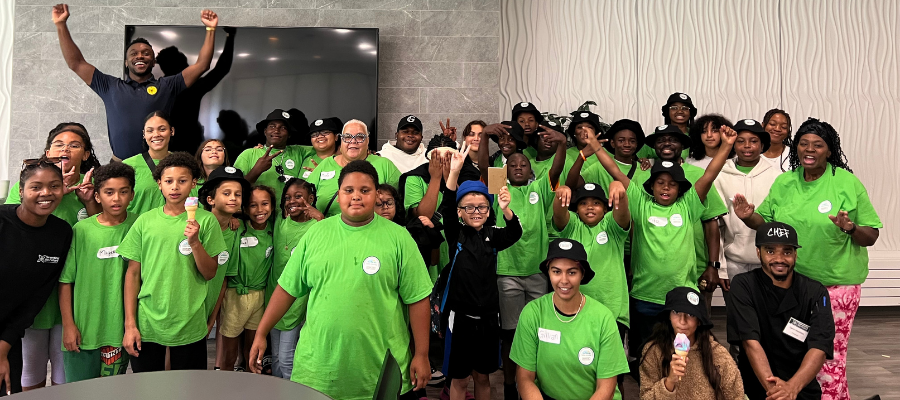
At Imhotep’s Legacy Academy (ILA), empowerment is built early and collectively. “Imhotep’s Legacy Academy empowers Black and African Nova Scotian youth through Science, Technology, Engineering and Mathematics (STEM)-focused programs that build leadership skills via hands-on projects, mentorship, and community engagement,” says Executive Director Asher Trim-Gaskin.
ILA mobilizes university students, faculty, and community leaders as mentors, creating layered pathways of support. “Programs like our FIRST LEGO League and After-School Program involve real-world problem-solving, team competitions, and robotics,” says Trim-Gaskin. Their FIRST LEGO League team recently advanced to compete in the Western Edge FIRST LEGO League Open, held in California in 2024.
That momentum extends into communities across the province. “Outreach in 52 historical African Nova Scotian communities and events such as science fairs and quiz tournaments further position students as STEM leaders,” says Trim-Gaskin.
Intergenerational initiatives also play a big part in education at ILA. “Culturally grounded education at ILA builds confidence by connecting STEM learning to Black heritage and communities,” says Trim-Gaskin. “This approach, blending real-world projects with African Nova Scotian history, helps students develop self-discipline and belief in their STEM abilities, as seen in rising Dalhousie STEM enrollments.”
Education serves as a tool for long-term community strength and self-determination at ILA. “Our mentoring models, programs, and national networks equip youth with skills for self-reliance and leadership,” says Trim-Gaskin. “By fostering entrepreneurship in rural and urban Black communities, we promote sustained community development and autonomy.”
Visit the Black Cultural Centre’s website for African Heritage Month events and programming at: