How a collaborative approach cut workplace injuries in half and the framework taking prevention even further
Twenty years ago, Nova Scotia’s workplace safety culture looked very different.
At the time, three out of every 100 workers were injured on the job each year—a sobering and preventable reality that needed to change.
For the past two decades, the Workers’ Compensation Board of Nova Scotia (WCB), the Department of Labour, Skills and Immigration (LSI), and safety associations across the province have worked together to empower employers to make workplaces safer.
Employers are responsible for protecting their teams, and with the right support, they’ve driven meaningful improvements. Today, Nova Scotia’s injury rate is 1.28 per 100 covered workers—less than half what it was in the early 2000s.
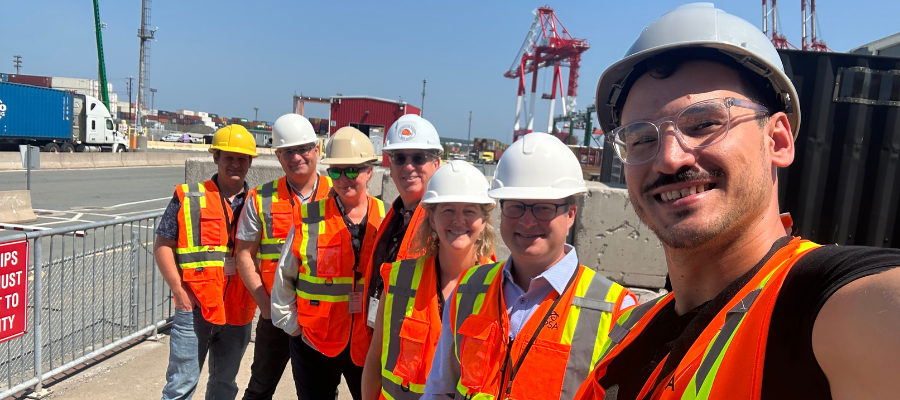
For WCB CEO Karen Adams and Scott Nauss, Senior Executive Director of LSI’s Safety Branch, that progress highlights the power of collaboration.
“When we look back at where we were 20 years ago, the statistics were frankly unacceptable,” says Adams. “We made a collective decision to draw a line in the sand and choose a different future for Nova Scotia workers. What we’ve accomplished since then proves what’s possible when organizations work together with a shared purpose.”
That shared purpose began with a shift in approach. Employers with the highest injury rates became the focus of a joint WCB and LSI effort to target resources where they were needed most.
Interventions like surcharges encouraged employers to improve safety, while province-wide campaigns raised awareness about injury prevention.
This targeted approach has had far-reaching effects. Nova Scotia’s fishing industry—once among the most dangerous—now benefits from dedicated safety associations, like Fish Safe NS, and leadership programs that put prevention ahead of compliance. In just one year, the injury rate in the fishing/trapping sector improved to 0.95 per 100 workers in 2024, down from 1.33 the previous year.
“Fish Safe NS is marking its 15th year, and our mission remains unchanged—to inspire a strong safety culture across the seafood industry through collaboration, education, and promotion,” says Arnold De Mings, Chair of Fish Safe NS. “We’re proud of what’s been accomplished and committed to building on this foundation for the future.”
Still, progress is never complete.
A recent review of the workers’ compensation system highlighted the need for stronger collaboration, clearer direction, and smarter data sharing between WCB, LSI, and prevention partners.
Enter Safer Workplaces Together—a roadmap for the future of injury prevention. More than a slogan, it focuses on three priorities:
• Reducing strains and sprains—the most common workplace injury
• Helping employers address psychological harm
• Supporting supervisors to build stronger safety cultures
This framework will keep everyone aligned through annual check-ins between WCB, government, and safety partners to review data, share insights, and set prevention priorities. Think of it as a GPS for safer workplaces.
“The review made it clear that while we’ve accomplished a lot, there’s still room for improvement,” says Nauss. “Safer Workplaces Together represents our commitment to continuous improvement and evidence-based prevention.”
The goal? Reduce injuries to 1.16 per 100 workers by 2030.
“That’s not an arbitrary number,” Adams explains. “It’s based on what’s achievable when we work together across all sectors—1and the outcomes we’ve already seen. More importantly, it represents thousands of Nova Scotians who will go home safely each day because of the prevention work we’re doing today.”
Fewer injuries mean stronger productivity, lower claim costs, and more focused teams.
With a strong foundation, a clear vision, and a shared commitment, the path forward is set—a safer, stronger Nova Scotia where more people come home from work every day.