How Halifax-based life sciences companies are shaping the future of health
Halifax is home to a growing cluster of life sciences companies working at different stages of the health care pipeline—from early-stage drug discovery to clinical trial support to the diagnostic tools that hospitals rely on every day. What connects them is a shared commitment to scientific standards, a drive to improve patient outcomes, and a belief that Nova Scotia has the talent and infrastructure to compete globally.
At Theranib Inc., co-founder Paola Marcato is working to bring a new class of cancer therapy from the lab to the clinic. A cancer biologist and professor at Dalhousie University, Marcato’s research centres on an enzyme called ALDH1A3, which plays a role in both metastasis and chemotherapy resistance. “When it’s present at high levels in patients’ tumours, it’s contributing to metastasis and therapy resistance,” says Marcato.
Her collaboration with a medicinal chemist at the University of Pisa, Dr. Concettina La Motta, led to the development of a promising new inhibitor—and ultimately to Theranib’s founding. “We were like, wow, these drugs are working so well—hitting this target way better than anything else that’s been shown,” she says. This work was published in the March 2026 issue of the journal iScience.
Theranib’s compound is a first-in-class therapy, meaning nothing like it currently exists on the market. If successful, it could benefit an estimated 800,000 patients per year across multiple cancer types globally. But getting there requires navigating the long and complex path from academic discovery to human trials—a process Marcato has had to learn from the ground up. “As a basic research scientist, you don’t think about commercialization and all the steps and processes that goes into getting a new drug to a first human trial,” she says. “Those are all things that we normally don’t think of discovery scientists.”
Marcato has built the commercial knowledge to complement her scientific expertise, developing pitch decks, financial plans, and investor strategies through programs like SheBoot and Invest Nova Scotia’s Accelerate program, and partnering conferences, and the support of business consultants and mentors. “It’s allowed me to even have a second startup a second drug we are developing in the lab, because now I know what to do,” she says. “It opens your eyes up to looking at your science differently – always thinking how can I bring this discovery to patients.”
That journey from lab to market is familiar territory for Mahmoud Mirmehrabi, President of Solid State Pharma. The company specializes in solid-state science—a critical but often overlooked stage of drug development. “One of our core missions is to bring drugs to patients faster,” says Mirmehrabi. “By providing deep insights into the solid-state properties of drug candidates, we empower our clients to make data-driven decisions, enhancing drug efficacy, stability, and manufacturability.”
With more than 1,500 cumulative projects completed and over 100 published journal articles and patents, Solid State Pharma has earned the trust of some of the world’s largest pharmaceutical companies. “Drug development is a long, complex, and extremely costly process for our clients, often requiring many years and millions of dollars to bring a single therapy to market,” says Mirmehrabi. “Because of this, they are very selective about where they place their trust and who they partner with.”
That trust, he says, is built through integrity, quality, and direct engagement. “We provide our clients with knowledge, not just data, and build strong, collaborative relationships through scientist-to-scientist engagement.”
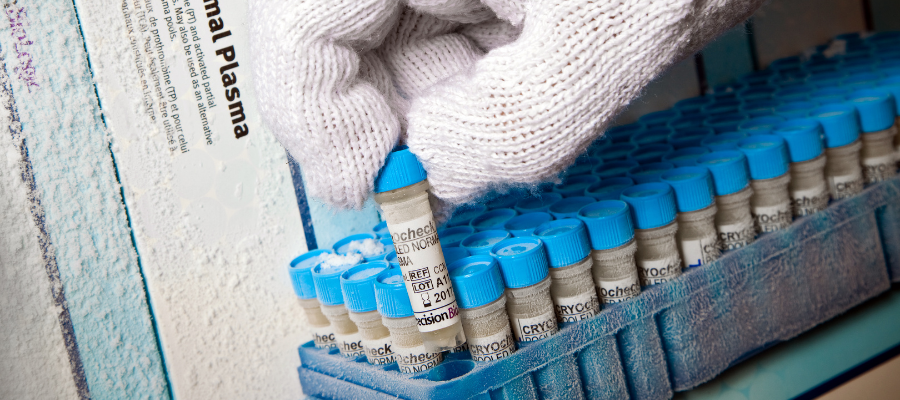
For Precision BioLogic, that trust extends into hospital labs around the world. The company develops frozen diagnostic products that support the accuracy and speed of medical decision-making. “Laboratory test results form the basis of most medical decisions,” say F. Jon Geske, Chief Scientific Officer, and Paul Empey, President and CEO. “Delivering faster, more accurate test results means that laboratory technicians can be confident in their results without repeat testing, and physicians can be assured that they will obtain the diagnostic information they need in a timely, accurate fashion.”

Founded in 1983, Precision BioLogic’s evolution was shaped by a practice the company calls “customer listening.” In the early 1990s, the team observed that freeze-dried products were time-consuming and error-prone for lab technicians, and so they worked with customers to develop a frozen alternative. “This ’ready to go’ product concept was enthusiastically received, and our CRYOcheck™ line of products was born and continues to this day,” say Geske and Empey.
That collaborative instinct remains central to the company’s identity. “We collaborate with our customers in understanding what their needs are, and often they will work with us in testing prototypes and making sure we are delivering products that make their lives easier and more efficient,” say Geske and Empey. Since 2018, the company has launched six new regulatory-cleared products and expanded through acquisitions, including Affinity Biologicals in Ontario and George King Bio-Medical in the United States.
All three companies point to Halifax’s strengths as a place to build and grow a life sciences business. Mirmehrabi highlights the region’s universities, its proximity to the pharmaceutical hub of the northeastern United States, and what he calls “a supportive business system.”
Geske and Empey describe “a perfect blend of universities, hospital innovation, start-ups, and mature companies, as well as support systems to help life science companies like Precision BioLogic grow and thrive.” They also note that Halifax’s quality of life is a draw for employees. “We work hard but recognize the importance of enjoying life outside of work, and Halifax offers an exceptional place to live a happy life,” say Geske and Empey.
For Marcato, the support has been foundational. “Invest Nova Scotia has been a huge support, as has Life Sciences Nova Scotia—both in funding and resources to help you understand how to commercialize,” she says. “Dalhousie is right up there as our number one supporter.”
Looking ahead, each company sees a role for the region in supporting continued growth. Mirmehrabi envisions strategic investments in the life sciences ecosystem, including a dedicated biotech district to help companies scale. Geske and Empey plan to continue growing through new product development, expanded partnerships, and potential acquisitions.
Marcato, fuelled by a recent $1 million River Philip Transformational Medicine Grant awarded by Nova Scotia’s River Phillip Foundation through Dalhousie University’s Faculty of Medicine, is focused on de-risking Theranib’s ALDH1A3 inhibitor drug and moving closer to a first-in-human trial. “Wouldn’t that be wonderful to have it here in Nova Scotia?” she says. “That would provide a clear, direct benefit for our patient population.”