One year of coverage for gradual onset psychological injury
A year ago, Nova Scotia led the way in Atlantic Canada by providing coverage for gradual onset psychological injuries (GPI)—usually caused by bullying or harassment.
In just one year, that change has already helped hundreds of workers in our province. Since coverage began, more than 400 workers have registered claims. All but seven are back at work. And, behind these statistics, are Nova Scotians whose lives have been changed after receiving the same level of support and care they would expect for a physical injury.
“Psychological injuries are just as real as physical ones. Both happen at work, and both deserve the same support—whether they happen all at once, or over time,” says Anthony Brown, Eligibility Specialist on WCB Nova Scotia’s dedicated GPI team.
A people-first approach
When the legislation to introduce coverage for gradual onset psychological injuries came into effect, it was a big step forward.
“This was about doing the right thing for people,” says Shelly Dauphinee, WCB’s Chief Engagement Officer. “When someone’s struggling because of what’s happening at work, they deserve support—just like they would for a physical injury.”
Employers, workers, and even our teams at WCB had questions: would the system be ready? Could it meet the needs of people in crisis? WCB had about a year to get ready for the new coverage, and they got right to work.
Instead of assuming the answers as they built the program, they asked.
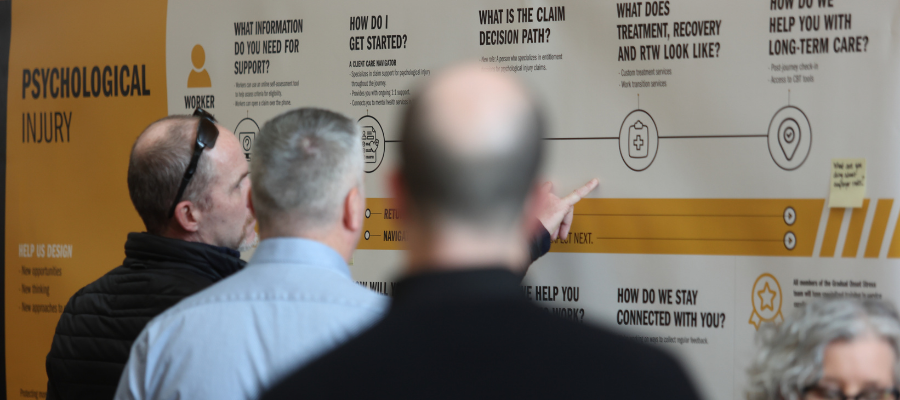
Through webinars, town halls, workplace mailouts, and one-on-one conversations, WCB listened to workers and employers to understand what they needed. That input shaped an entirely new service model, built to be simpler, faster, and more responsive.
WCB rewrote letters in plain language and streamlined processes. They set new timelines for responses, decisions, and access to care. They created a completely new website, with practical resources for both workers and employers, including early self-assessment tools, educational videos, and prevention resources.
Results that matter
The real measure of success is the conversations that prevent claims altogether, and the interventions that get people back to healthy, productive work.
“Sometimes, we talk to them, understand the situation and find a path—so there’s no claim at all,” says Brown. “Other times—in fact, in the vast majority of cases—they’re able to return to work safely with the right interventions and conversations in the workplace. Even in cases where claims aren’t accepted, we’re hearing that people appreciate receiving resources to resolve their workplace issues.”
Building safer workplaces together
For Nova Scotian employers, this new coverage represents both a responsibility and opportunity. By recognizing and addressing psychological injuries early, organizations can:
• reduce time away from work
• lower costs associated with claims
• improve employee morale
“Recognizing gradual onset psychological injuries isn’t just about changing legislation, it’s about changing safety culture,” says Mark Roach, Vice-President of Psychological Injury and Continuous Improvement at WCB. “We’re acknowledging the reality of the risks to psychological health at work and sharing the responsibility to create environments where people can be safe and thrive.”
One year in, WCB’s commitment is showing results: more than one worker helped every single day, faster responses, clearer communication, and better outcomes. But perhaps most importantly, a stronger system built on listening and learning.
“We’re committed to getting better every day,” says Brown. “And for the Nova Scotians whose lives have been changed by this coverage, that commitment makes all the difference.”
Learn more at: